Monitor shared warehouse tablets
Use device reporting and geofence activity to investigate a shared-tablet shift handoff.
A warehouse team shares company tablets across shifts. When a tablet is missing from the handoff area, IT needs a defensible starting point: which device record is involved, when it last reported, and whether a relevant boundary event was recorded. Geolocation supports that investigation without treating a map pin as proof of custody.
Define the operational problem
Asset names can be similar, staff change between shifts, and an older location can look current when its timestamp is ignored. The goal is to give the shift owner a consistent investigation record and a clear next action. It is not to infer an employee's attendance or to replace a physical handoff check.
Assign responsibilities before the pilot: the warehouse supervisor identifies the missing tablet and approves a safe physical check; an authorized IT operator reviews device data; the response owner decides whether recovery or another security procedure is needed.
Prepare the site and device population
Choose a small, known set of company tablets and verify their identifiers, ownership, enrollment and reporting capability. Confirm reporting for the relevant platforms. Establish the latest report time for each test device before introducing a boundary.
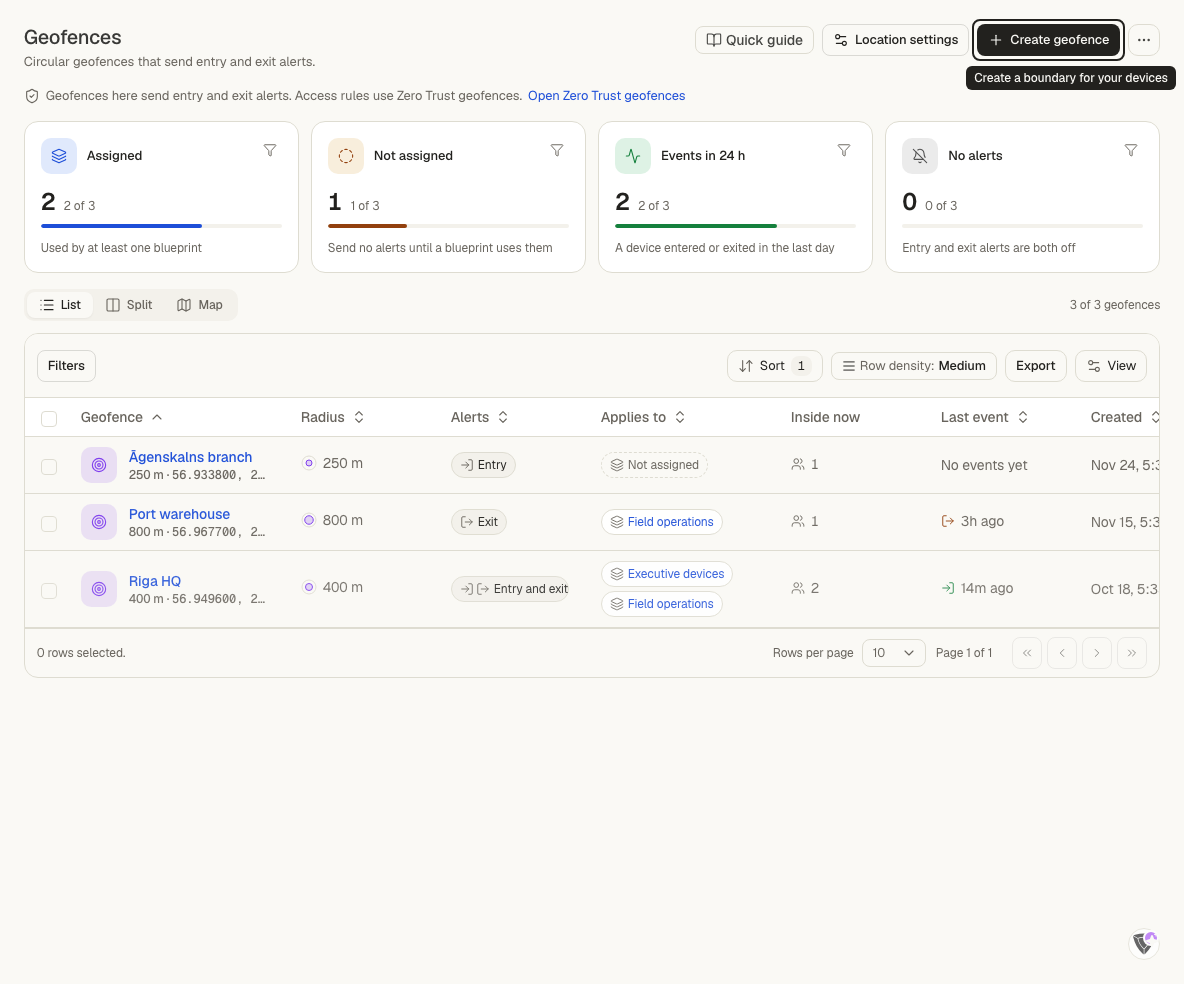
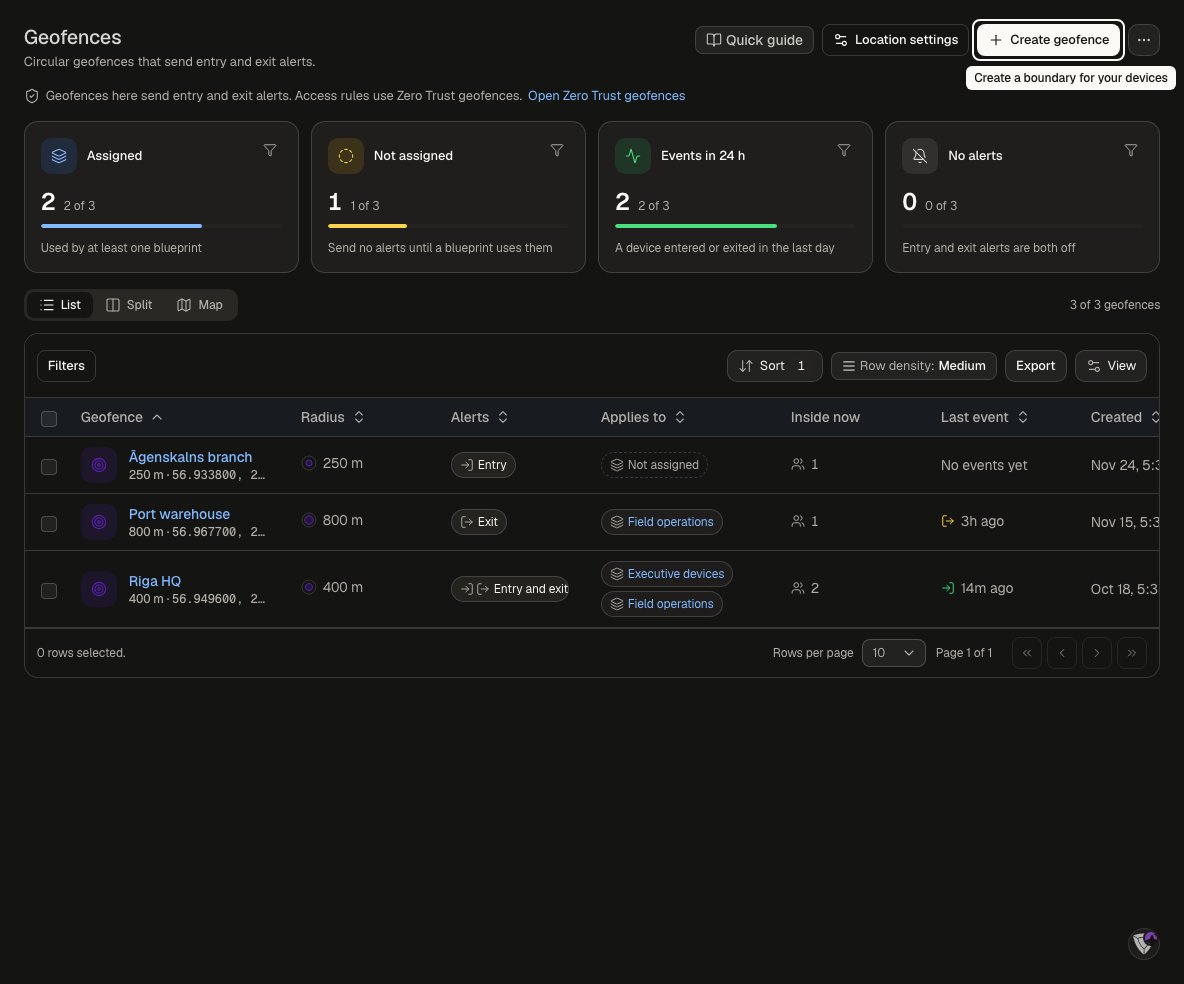
Create a geofence for the site using the supported center and radius controls. Review Applies to and the linked blueprint that delivers the geofence to devices, along with entry and exit preferences. Inspect the blueprint's target population before using it for the warehouse pilot. Keep the boundary meaning operational: for example, the approved yard area. A circle should not be described as the exact physical warehouse perimeter when it does not match it.
Investigate a handoff discrepancy
- Find the tablet in Devices and confirm its identifier with the handoff record.
- Read State and Last report. Open Location for the absolute time and available accuracy.
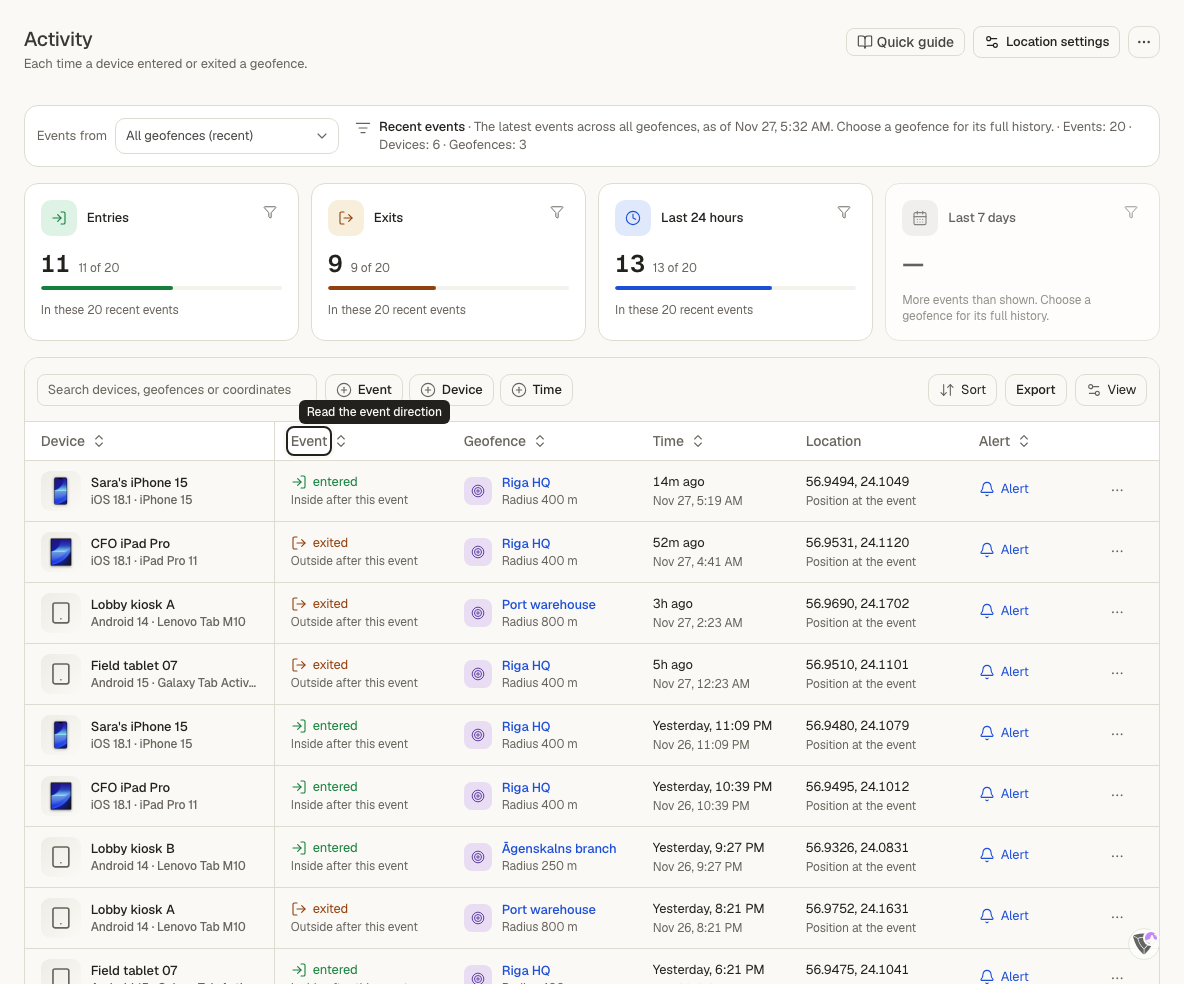
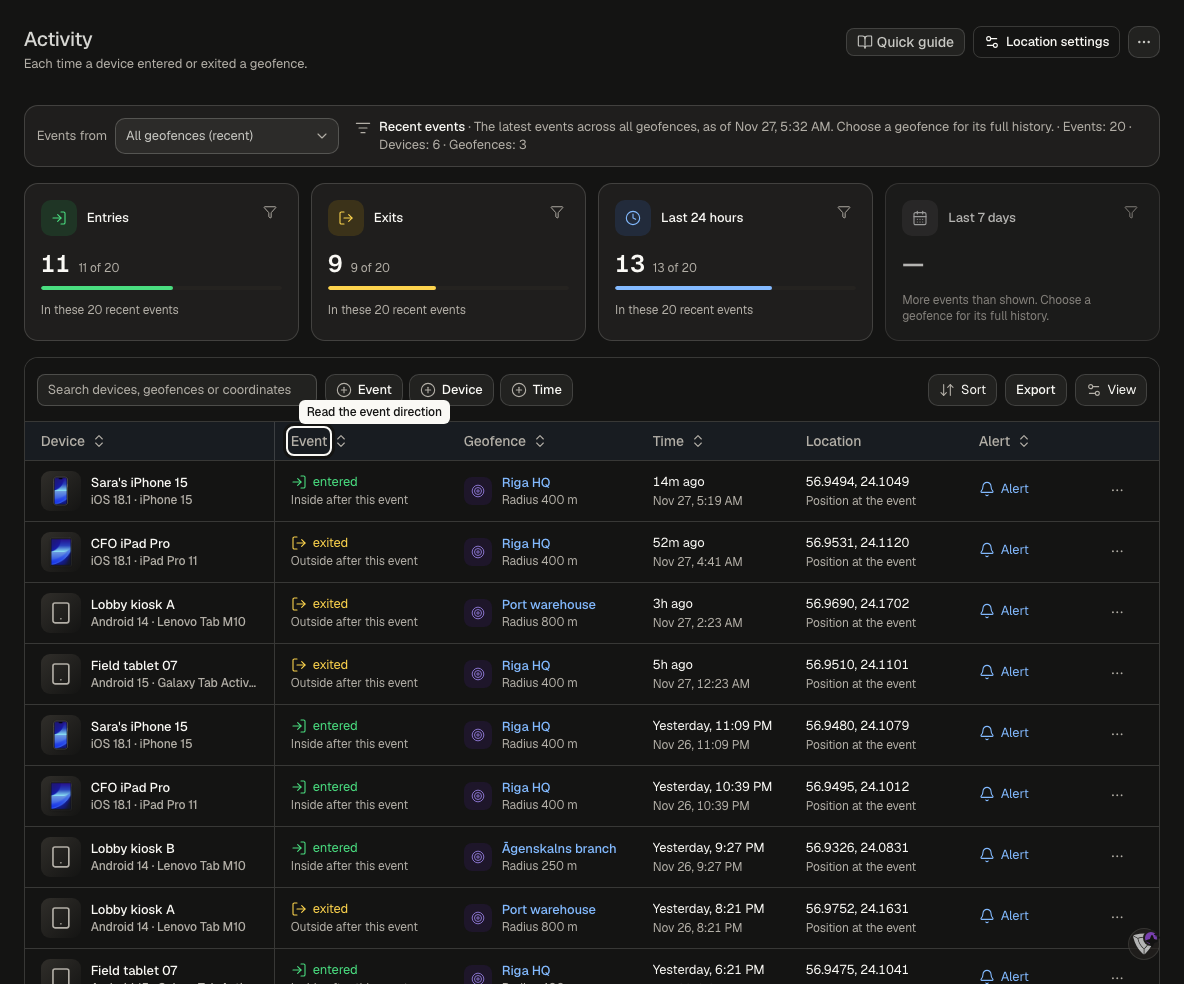
- Inspect the relevant boundary's Activity for the device. Read the event direction, recorded time and position at the event.
- Compare those observations with the handoff time. Preserve the time zone in the incident record.
- If appropriate and available, issue one Locate now request. Keep acceptance or answer state, available receipt evidence and the recorded position separate. An unchanged position time can reflect coalesced nearby observations; by itself, it does not establish whether the request was answered.
- Give the response owner the observed facts and the remaining uncertainty. Confirm the physical device through the warehouse's established process.
Interpret the common branches
An exited event can support checking a site departure, but it is a report-based observation at a recorded time. No event can mean there was no relevant evaluation, no applicable assignment, missing reports, or no matching result; it is not proof that the tablet remained on site. A report with broad accuracy near a boundary needs more careful interpretation than a clearly separated position.
If a notification is required, test its delivery independently. The existence of a boundary event and the receipt of an alert are different acceptance checks.
Measure the pilot responsibly
Record how many selected tablets can report, how many have useful recent reports, and how many incidents include enough evidence for a next step. Keep the population and observation period with those counts. Establish the baseline before claiming that the workflow improves investigation time; this scenario does not supply a measured time saving.
The pilot is ready to expand when the team can reproduce the event check, explain unresolved cases, and hand over the correct device record without broadening access to unrelated location data.